Showing posts with label zaidan. Show all posts

Monday, 1 April 2013

Tribal animosities and militia rule tarnish Libya's human rights record and democratic credentials.
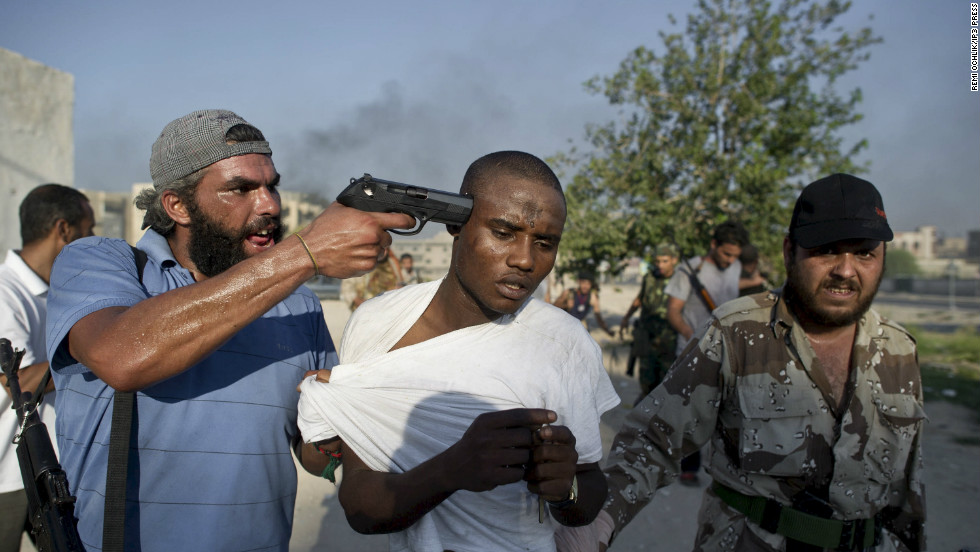

Tribal animosities and militia rule tarnish Libya's human rights record and democratic credentials.

remi ochlik

Hassan Al Amin, the chairman of the Human Rights and Civil Society Committee and a long time Gaddafi opposition figure, resigned earlier this month following numerous death threats. Justifying his decision, he cited his inability to conduct his work as chairman in an increasingly polarised political environment .

Al Amin's high profile resignation serves as a reminder of the reality of Libya's new 'democratic' rule and the state of human rights in the country. The authoritative annual report published by Human Rights Watch for 2013 reveals that Libya continues to be plagued by serious rights abuses, including arbitrary arrests, torture, and deaths in detention.

Like many Libyans, Al Amin believes that the GNC has strayed from its mission and obligations towards the Libyan people. It has failed to deliver on the most important issues affecting the country during the ongoing transitional period.

The GNC has already deferred the drafting of a new constitution to an unforeseeable time and has been unable to maintain adequate oversight over governmental program. Critics have also pointed to the GNC's failure to implement a coherent plan of national reconciliation and transitional justice.
Al Amin's views and his will to foster the respect of human rights in Libya have earned him a number of enemies, particularly in his electorate district of Misrata.

Misrata provides an illustrative and bleak example of everything that is wrong with Libya today.
The town is a place where lawlessness, the "rule of the gun" and a dubious 'revolutionary legitimacy' are vaunted by armed militias. They have come to trump the democratically elected local representatives and civil law.

Like elsewhere in Libya, Misrata's prisons are filled with those captured during the chaos and in the aftermath of the revolution. Militiamen allegedly guarding these facilities subject their captives to inhuman and degrading treatment. Arbitrary detentions, torture and murder are a common occurrence; perpetrated by the very men supposed to prevent them. Accountability is non-existent and government officials tasked with preventing the abuse such as Al Amin are branded traitors and threatened for merely doing their job.

Though these issues affect the whole of Libya, the current situation in Misrata fully captures the toxic legacy of tribalism has had on the country.

Gaddafi maintained his hold on power by manipulating old tribal grudges against his opponents. Applying the clausewitz's concept of war being the continuation of policy by other means, it is easy to see how tribal cleavages that kept Gaddafi in power determined which groups supported the revolution and which groups did not.

Entire tribes whose members supported the old regime against the revolutionaries have been targeted by revenge killings and abuse by armed militias while central authorities turn a blind eye.

For example, the people of Tawergha are unable to return to their city out of fear of revenge from Misrata Militias. Tawerghians allied themselves with the Gaddafi regime during the revolution. They participated in the siege of neighbouring city of Misrata and now face persecution.

Tawerghans have been targeted for arrest and attack by Misrata's Militias, who accuse people from Tawergha of committing serious crimes against them during the war. It is reported that around 1,300 people from Tawergha are detained, missing, or dead.

Human Rights Watch went as far as stating that abuses committed against Tawerghians may amount to crimes against humanity and could be prosecuted by the International Criminal Court.
The image of Libya as a poster-child for successful democratic transition has been tarnished by the brush of tribal lawlessness. If the GNC does not take immediate and substantial steps to remedy the situation on the ground, it risks turning the current regime into the very thing Libyans fought and died to overthrow.

Breaking the spiral of violence:

If the GNC fails to act, the current status quo is likely to have disastrous consequences for the country and its citizens. Tribal feuds can spiral into a never ending vendetta of revenge killings. Neutralizing militias remains the most basic prerequisite for implementing a system of governance based on justice and the rule of law. Laws and policies cannot be drafted when neither the parliament nor the Prime Minister's office are safe from armed groups storming them.
Though grievances against the old regime are justifiable, forcing officials chosen by the ballot out of office with the barrel of a gun goes against the core principals of public office in a democracy. Claiming authority through 'revolutionary legitimacy' is merely the exercise of control through fear and violence, the hallmarks of Gaddafi's regime.

Reconciliation is the first building bloc for a successful transition. The GNC should therefore deliver on its promise to make reconciliation a priority. It ensures the return of dignity and justice to all who have been wronged , allowing everyone to move forward without being hampered by the past.
Reconciliation must be followed up by an inclusive development program. Young Libyans in Militias must be incentivized with alternative sources of income and better prospects to develop as law abiding citizens.

Finally, NGOs and officials overseeing the application of the law and the respect of human rights should be treated as partners of the Government. A robust civil society strengthens the rule of law and discourages 'tribal justice'.

Tuesday, 12 March 2013

TRIBAL CLASHES UNDERMINE THE DEMOCRATIC TRANSITION AND STABILITY IN LIBYA


TRIBAL CLASHES UNDERMINE THE DEMOCRATIC TRANSITION AND STABILITY IN LIBYA: There Is No Space and Time for Whimsical Tribal Ideologies In This Day And Age

Associated Press
Libya has recently witnessed a series of tribal clashes that left several people dead and wounded.  These clashes are not restricted to one group or geographical area of Libya. They happen across the country and have become significantly deadlier since the revolution. 


Since Libya is home to over 140 tribes and clans, strife and competition between these groups has always been part of the Libyan landscape.


In theory, Gaddafi’s ‘Al-Jamahiriya’ system was supposed to function through direct democracy and popular committees. In reality his regime survived with system of patronage coupled with the exploitation of tribal cleavages and brutal repression.  Yet the recent of these clashes can be directly linked to the fallout of the revolution. 

The fall of the old regime brought with it the mass proliferation of weaponry and the collapse of the thinly stretched state security apparatus. Furthermore, the revolution deepened the polarization of allegiances, often pinning tribes supporting Gaddafi against those that rose against him. All of this creates an environment of insecurity and animosity that can make a simple dispute between individual members spiral into a deadly fight between entire communities.  

The most recent clash took place on 11/03/2013 in Sebha between members of the Wirfalla and Qadhadhfa tribes.  At least four people are reported dead and a dozen wounded. Sebha has been the theatre of tribal clashes involving other tribes. Earlier in January the area saw clashes between Qadhadhfa and Awlad Suleiman tribes that left scores of dead and wounded.  

Both the Wirfalla and Awlad Suleiman tribes were hostile to the former regime and fought against Gaddafi’s Tribe of Qadhadhfa during the revolution. Such conflicts are not limited to Sebha; the Nafusa Mountain town of Mizdah has also seen significant tribal strife that began on 02/03/3012. Mashashiya tribesmen fought members of the Al-Qantrar tribe. Both groups have a history of violent clashes. In 2012 fighting between the two tribes and their respective allies left over 100 people dead.


Given the magnitude of the changes sweeping the country and the fragile state of Libyan stability, there is no space and time for whimsical tribal ideologies in this day and age. Libyans cannot afford another revolution. Regardless of which tribes are involved or where it is taking place, the outcomes is always the same.
Besides the unnecessary death and injury of combatants/civilians, violent clashes often cause the suspension of all social activity. Schools and local businesses are often closed down during these disruptions. Furthermore, attacks on property can destroy local infrastructure and amenities causing disruptions to civil life. Yet the responsibility for these affairs cannot be entirely blamed on conflicting tribes. The current government should do more to help these regions overcome their differences.      

The lack of a strong governmental presence in the region exacerbates the Crisis:

Unrest and insecurity have continued to plague the south of Libya since the end of the revolution, with the state exercising minimal control over many areas. In December 2012, Congress representatives for the region walked out of parliament in protest of the deteriorating situation of their constituencies and the “crippling silence” of the central authorities in Tripoli.


The political vacuum and the absence of central government from the area foster an environment suitable for the proliferation of gangs and armed criminals that are often behind many of the clashes. The central government should make its presence felt in these troubled areas and dedicate more resources on the ground.

To be fair, tribalism in Libya runs deep and cannot be eradicated overnight.  Only a gradual and relentless approach will eliminate tribal violence from Libyan society.


The most important factor behind the violence remains the absence of basic security and the widespread availability of weapons. In the short term, these are the first issues the government should tackle not only in areas of tribal fighting, but throughout the Libyan territory.

 Secondly, the central authorities need to establish the primacy of the rule of law and build the necessary institutions to maintain it.  This is a long term effort that cannot be imposed from Tripoli and has to arise from local consent. The current relationship with the influential tribal elders need to be strengthened and weaved into the structure of new institutions or these would fail.

Libyans should embrace their eclectic culture and how each tribe contributes to the country’s social fabric. Cultural/tribal differences and allegiances should not be exploited by petty politics. Such instrumentalization is a divisive force than can only lead the country down the path of violence and destruction. Gaddafi relied on such strategies to maintain his grip on power. Yet, the new authorities possess something far more powerful: democratic legitimacy and the opportunity to create a Libya where inclusive institutions and the rule of law trump old ideologies and tribal kinship. 


H.T